Stake in Singapore: Brand, Operator and Licence Record
Three separate objects sit behind one brand search: a marketing name, a company that presents itself as the operator, and the web address a Singapore visitor actually loads. Our file keeps them apart, because a reader's legal position depends on the last of those rather than the first. The recorded exact address is stake.com, the presented operator is Medium Rare N.V., and the Singapore licence position is fixed by what the Gambling Regulatory Authority publishes. Against records checked on 31 August 2026, no current remote-gambling licence match exists for that address, and no official adverse finding against it was supplied either.
Brand, company and web address: three checks, not one
The marketing name settles nothing on its own. Two further identifiers decide what a reader is dealing with. The first is the legal person behind the service: Medium Rare N.V. appears as the presented operator, which is a statement made by the operator rather than a record filed with a Singapore authority. The second is the exact address, because one brand can appear on mirror addresses, application shells and forwarded links that route to different companies and different terms. Our checks therefore treat stake.com as the only address on file and every other spelling as unverified until captured and dated. Permissions held in a foreign market, however genuine there, create no authority to serve people in Singapore. The identity map keeps each row inside what the dated records support.
| Identifier | Position on record, 31 August 2026 |
|---|---|
| Brand name | Stake, marketing name only |
| Presented operator | Medium Rare N.V., operator-tier statement, unconfirmed locally |
| Recorded exact address | stake.com |
| Local remote licence match | None found in the Authority's current record |
| Licensed local alternative | Singapore Pools, the only licensed remote operator |
| Signal | Amber, open evidence |

Licence position for Stake in the Singapore record
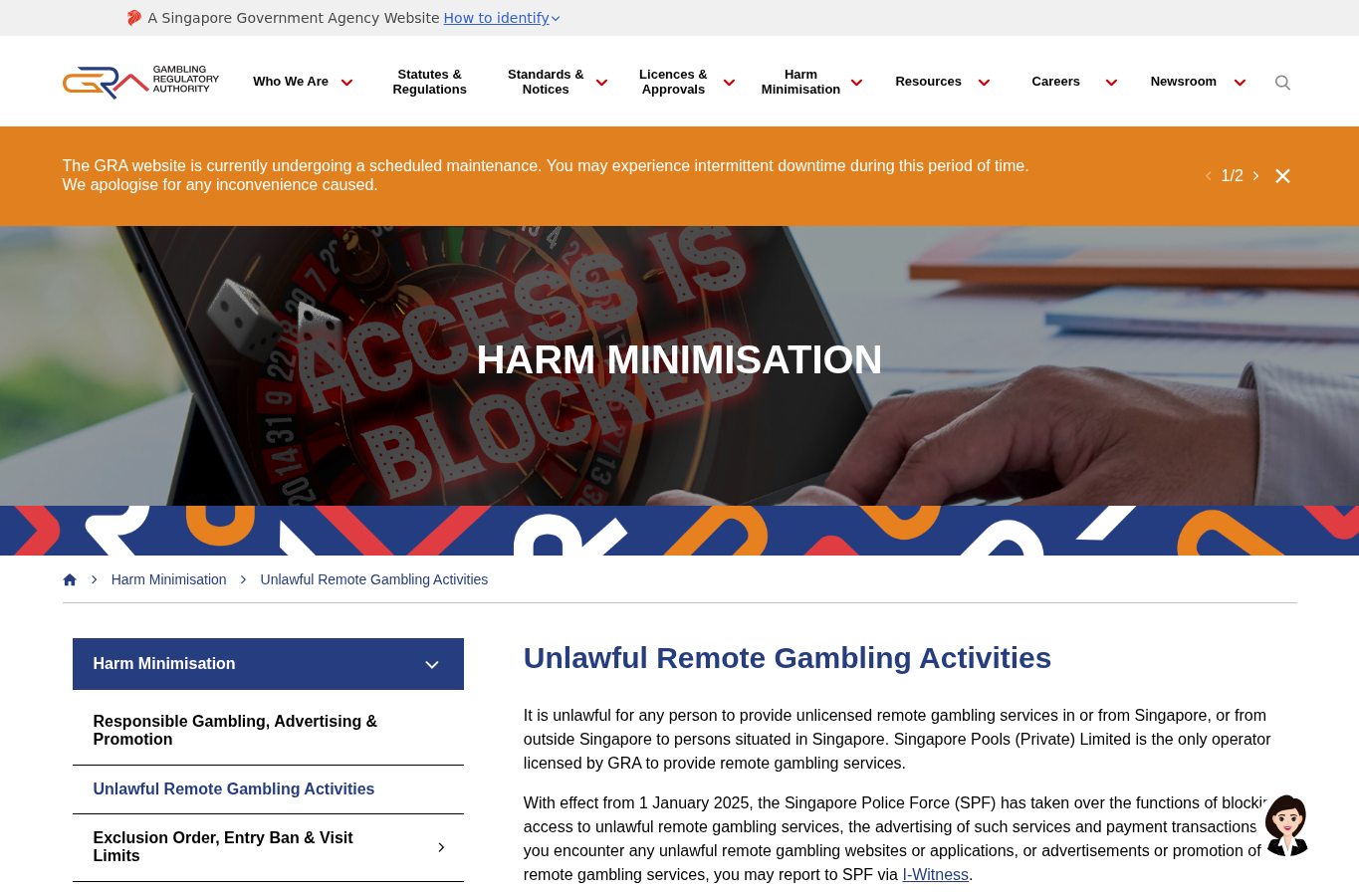
The primary records are short and specific. The Authority states that Singapore Pools is the only operator licensed to provide remote gambling services, and that reports about unlawful remote gambling have gone to the Singapore Police Force since 1 January 2025: Authority guidance on unlawful remote gambling activities. The Ministry of Home Affairs frames the wider rule, that gambling is prohibited here unless licensed or exempted, with the Authority regulating the sector: Ministry of Home Affairs on regulating the gambling industry. Read together, those records place the service behind the recorded address outside the licensed local channel. What they do not do is establish misconduct. A missing licence entry is a gap in authority, not a finding against a company, and that distinction is why the signal stays amber.
Legal or not for someone playing from Singapore
The statutory framework sits in the Gambling Control Act 2022, which carries the current definitions, the offence structure and the minimum-age framework: Gambling Control Act 2022, consolidated text. Two practical consequences follow. First, the test is never whether a service looks polished; it is whether the service reaching a user is licensed or exempted. Second, because the licensed remote channel here is limited to a single operator, any other remote service accessed locally falls outside it, with consequences set by statute rather than by the operator's terms. Our summary is not legal advice, and the position for an individual depends on facts the supplied records cannot settle, including where an account is opened and who controls the service at the moment of play. Plain-language notes sit in our Singapore gambling law guide.
Scam or legitimate: what each evidence tier actually carries
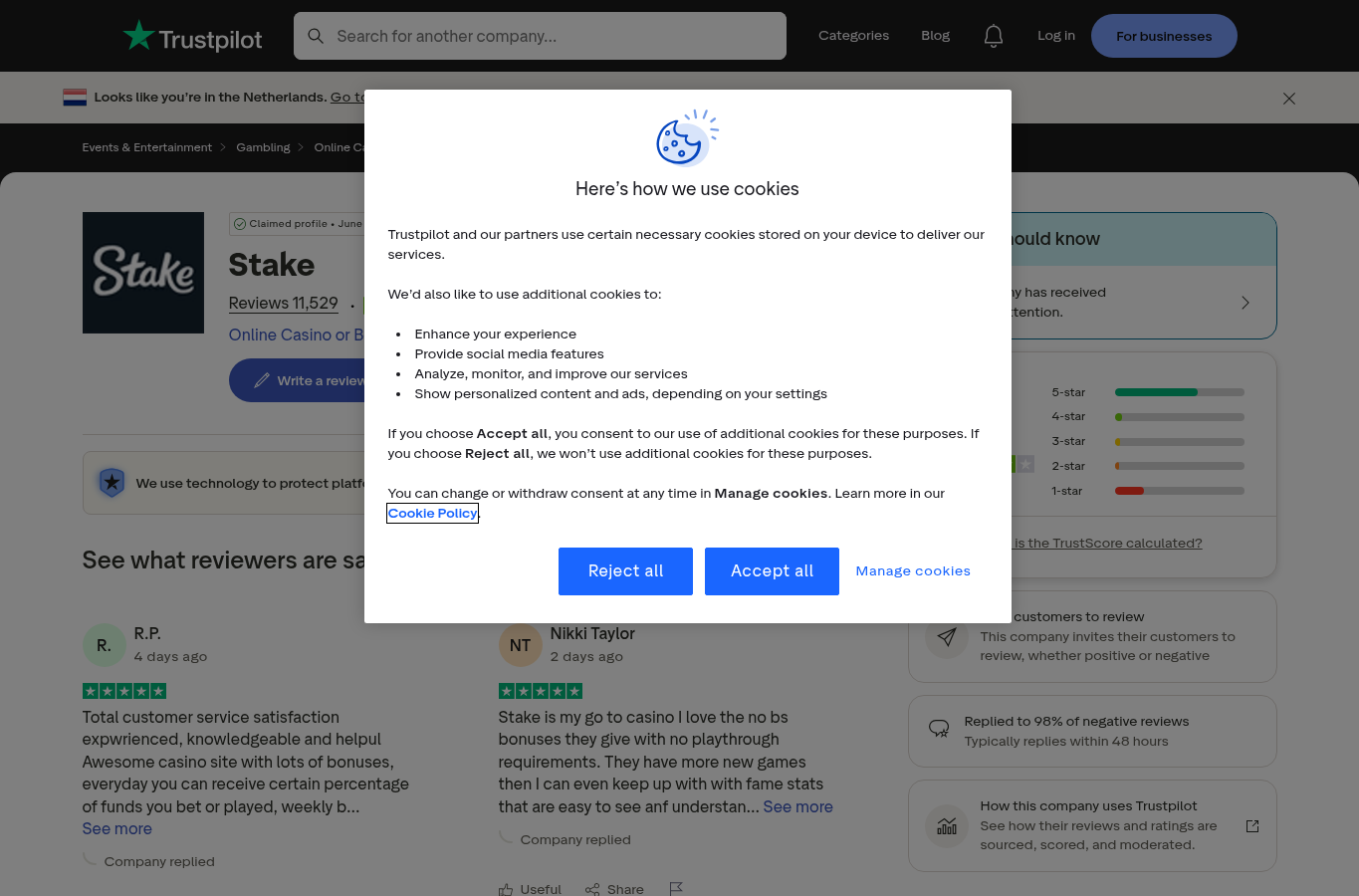
That question is answerable only in tiers, and mixing them is how unsafe verdicts get written. A primary record is published by a competent authority. An operator-tier item is something the service says or serves about itself, including its corporate name and its brand mark. A user-context item is a public signal such as search demand or a review listing, which can point at a problem without establishing one. The supplied local context material records search interest and offshore status; a public review listing captured the same day records complaints in the words of the people who wrote them. Both remain allegations. Nothing supplied documents a refused withdrawal, a confiscated balance or an enforcement action, and nothing documents local authority. Open, not cleared and not condemned, is the accurate description.
| Record | Tier | What it settles, and its limit |
|---|---|---|
| GRA-REMOTE | Primary | One licensed remote operator and the reporting route; names no offshore address |
| MHA-REGULATION | Primary | Prohibition unless licensed or exempted; no entity-level finding |
| GCA-2022 | Primary | Definitions, offences, minimum age; no operator-specific outcome |
| PRES-STAKE | User context | Local search demand and offshore status; proves no conduct |
| LOGO-STAKE | Operator | Which brand mark the address served; no licensing value |
Payments: identify who receives the money before it moves
No deposit, cryptocurrency transfer or account test was performed, so no method, fee, minimum or processing time is stated. What can be set out is the checkpoint list to run before money moves, because on offshore services the receiving party is often not the company shown on the interface. Recording the payee name, settlement currency, wallet or intermediary and an exact timestamp costs nothing, and it is the only material a bank, card issuer or investigator can work with later. Card and bank rails leave a traceable counterparty; on-chain transfers usually do not, and a mistyped destination is unrecoverable. Where a payment step names a company other than the presented operator, the mismatch is itself the finding. Our sequence is documented in our payment verification checks.
| Checkpoint | What to record | Risk if skipped |
|---|---|---|
| Payee identity | Exact company or wallet name receiving funds | No counterparty to name in a dispute |
| Rail chosen | Card, bank transfer or on-chain transfer | No recall path where crypto is used |
| Currency and rate | Amount sent, amount credited, conversion applied | Silent spread absorbed as a loss |
| Timestamp | Local time of request and of credit | Weak evidence for a chargeback window |
| Terms version | Copy of payment terms in force that day | Later terms applied to an earlier deposit |
Withdrawals: no tested outcome exists
There is no payout result on file. No test transaction was attempted, so any figure for withdrawal speed, monthly caps or verification-triggered holds would be invention. Two structural points still hold. Offshore withdrawal rules apply in the version in force when the request is made, and that version can change between a deposit and a cash-out. And because no local licence covers the service, no Singapore regulator has power to order a payment. A reader wanting comparable evidence should capture the withdrawal rules at signup, the balance before the request, the request confirmation and every message that follows, each with a date. That is precisely the material required before any payout claim could enter our dated records for the operator.
Identity checks and account verification
Verification behaviour is undocumented in the supplied material, so accepted documents, timing and data-retention arrangements are all open. Several checks remain available to a reader. Note which legal entity requests documents and whether that name matches the presented operator. Note where the terms say personal data is held and which jurisdiction's law they nominate. Note whether identity is checked at registration or only at the first withdrawal, since late verification is where offshore disputes usually begin. Age rules are not a matter of operator discretion, and the minimum-age framework sits in the statute cited above rather than in a service's own conditions. The routine we apply to every operator file is listed in our operator check routine.
Complaints: who receives a report in Singapore
Routing is one of the few things the primary records settle cleanly. Since 1 January 2025, reports about unlawful remote gambling activities go to the Singapore Police Force rather than the Authority's harm-minimisation channel, and because no local licence covers the service, no local licensing body can order a refund or a payout. Three realistic routes remain: the operator's own dispute process, a chargeback or recall through the bank or card issuer where those rails were used, and a police report where an offence is suspected. Dated allegations we can verify are logged in our complaints and scam warnings log. Where gambling itself has become the immediate problem, urgent help contacts are listed separately.
Copy addresses and look-alike entry points
Look-alike entry points are the most common way a reader ends up somewhere other than the address on file. The brand mark fetched for the recorded address confirms which favicon that address served on 31 August 2026 and nothing further, since a copy can serve the same image within minutes. Type the address rather than following a forwarded link, check the certificate name against what loads, and treat variant spellings, added hyphens, alternative extensions and download prompts as separate services until each is captured and dated. Where a mirror address is promoted with an unusually generous offer, the offer is the bait and the address is the exposure. The comparison below sets out what each check can and cannot rule out.
| Check | How to run it | What it cannot rule out |
|---|---|---|
| Typed address | Enter the recorded address manually | Redirects applied after loading |
| Certificate name | Open the padlock and read the issued name | Valid certificate held by a copy operator |
| Brand mark | Compare the served favicon | Nothing; identical images are trivial to copy |
| App or download prompt | Note the publisher name in the store listing | Which entity controls the build after install |
Risk map and open questions
The risk position follows the records rather than a rating. The licence gap is documented, the operator identity is presented rather than filed, and the money path, verification behaviour and current control of the address are untested. Accessibility from Singapore is also unverified, so nothing here states that the service is reachable or blocked. Ranked by consequence, the exposure sits in the order below.
| Exposure | Evidence status | Consequence if it materialises |
|---|---|---|
| No local licence covering the service | Documented by primary records | No regulator here can compel a payout |
| Unverified contracting entity | Operator statement only | Unclear counterparty in any dispute |
| Untested money path | No transaction on file | Recall may be impossible on crypto rails |
| Unknown verification timing | Silent in the records | Funds held pending late document requests |
Readers who have weighed those gaps and still want the commercial route we check can use Continue with the recorded route, while the licensed local channel is documented in our Singapore Pools file.
Evidence chronology, method and corrections
Every claim above carries a source and a check date, and the chronology below is the whole of it. Where a record is silent, the row says so instead of filling the gap with an inference. Signals move only on documents: green requires current primary evidence naming the precise address and entity, red requires an official adverse record or corroborated documented evidence, and everything in between is amber. Scoring rules are published in our methodology, and the standards we hold ourselves to in our editorial policy. Dated records and corrections are welcome through corrections and contact. Anyone reviewing their own play should also read our responsible gambling notes.
| Date | Record | Tier | Standing |
|---|---|---|---|
| 1 January 2025 | Reporting route moved to the police | Primary | Current, cited for complaint routing |
| 31 August 2026 | Authority remote-licensing record | Primary | Current, no match for the recorded address |
| 31 August 2026 | Ministry statement on regulation | Primary | Current, prohibition unless licensed |
| 31 August 2026 | Statute consolidated text | Primary | Current framework, no entity finding |
| 31 August 2026 | Local context page and review listing | User context | Retained, allegations only |
| 31 August 2026 | Brand mark fetch | Operator | Retained, no licensing value |
Common questions
Is Stake licensed to offer remote gambling in Singapore?
No licence match was found. The Authority's current record names Singapore Pools as the only operator licensed to provide remote gambling services here, and nothing in the material checked on 31 August 2026 places the recorded address inside that licensed channel.
Does an amber signal mean the operator is a scam?
No. Amber records open evidence: no competent authority has published an adverse finding we can cite, and no local authorisation exists either. Red would require an official adverse record or corroborated documented evidence, and neither was supplied.
Who operates stake.com?
Medium Rare N.V. is the presented operator name. That is an operator-tier statement rather than a filing confirmed by a Singapore authority, so the legal person contracting with a user, and the entity receiving payments, both remain unverified in our records.
Where do I report unlawful remote gambling in Singapore?
To the Singapore Police Force, which has received those reports since 1 January 2025 according to the Authority's guidance. Payment recalls run through a bank or card issuer instead, and neither route depends on an operator agreeing that a problem exists.
Which deposit and withdrawal methods are confirmed for the service?
None. No transaction, cryptocurrency transfer or account test was carried out, so any figure for methods, fees, limits or payout speed would be unsupported. Payment claims will appear only once a dated test or a primary record exists.
How can I tell the recorded address from a copy?
Type the address instead of following a forwarded link, read the certificate name, and treat variant spellings, added hyphens, alternative extensions and download prompts as separate services. A matching logo proves nothing, since any copy can serve the same image.
What would change the signal?
A current licence entry naming the exact address and entity would support green. An official adverse record, or corroborated documented evidence such as an enforcement notice, would support red. Send dated records through the corrections route and the file is reviewed.