Fun88 in Singapore: scam or legit? Evidence review
Bottom line: what the evidence does and does not show
The available record does not establish that Fun88 is a scam. It also does not establish that the service operating at fun88.com has a current Singapore licence, that its corporate controller is confirmed, or that deposits and withdrawals have been tested. The appropriate consumer conclusion is therefore limited: the service remains unverified for Singapore, and the evidence is open rather than conclusive.
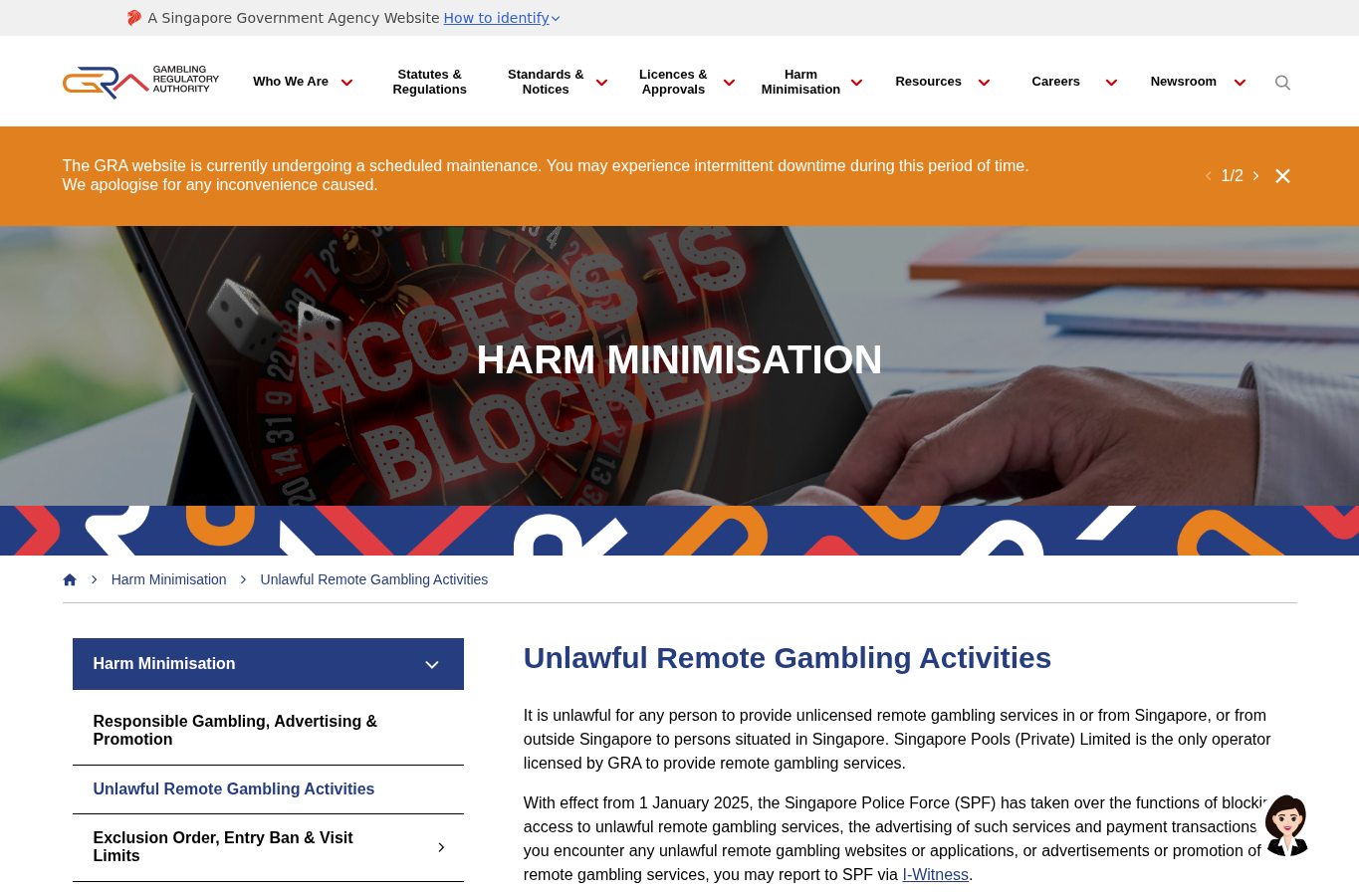
Singapore’s regulatory material states that gambling is prohibited unless an activity is licensed or exempted. The Gambling Regulatory Authority’s remote-gambling information identifies Singapore Pools as the only operator licensed by GRA to provide remote gambling services. That is a regulatory fact about Singapore’s licensed remote-gambling framework; it is not proof that every overseas-facing service is fraudulent.
| Question | Evidence-led answer | Confidence |
|---|---|---|
| Is the recorded host known? | The reviewed host is fun88.com. | Recorded domain only |
| Is a current GRA licence confirmed? | No current GRA match was found in the supplied evidence. | Open |
| Was an account tested? | No account, deposit, withdrawal or support test was completed. | Not tested |
| Is it a confirmed scam? | No official adverse finding or corroborated fraud finding is supplied. | Not established |
Primary Singapore regulatory evidence
The strongest evidence is primary regulatory and legislative material. The GRA remote-gambling guidance says Singapore Pools is the only operator licensed by GRA to provide remote gambling services, and records that reporting moved to the Singapore Police Force from 1 January 2025. The Ministry of Home Affairs explains that Singapore gambling is prohibited unless licensed or exempted and that GRA regulates the sector.
The supplied record does not contain a current GRA entry matching Fun88, fun88.com, or a confirmed legal entity behind that host. That absence is not an official finding that the operator is unlawful, nor does it prove that the host is controlled by a particular company. It does mean a licence claim should not be accepted without a precise, current primary-record match.
| Record type | What it supports | What it cannot prove |
|---|---|---|
| GRA information | The stated licensed-operator position for remote gambling. | That Fun88 is fraudulent. |
| Singapore legislation | Definitions, offences and the minimum-age framework. | The identity of Fun88’s operator. |
| Company or website material | Only statements made by the service, if independently matched. | A regulator-issued licence. |
Host, operator and licence match
The domain recorded for this review is fun88.com. The supplied asset is a favicon fetched for that exact domain. It can help identify the host being discussed, but it is not a corporate registry extract, a regulator record, or proof that the domain is operated by a named legal entity.
The evidence brief says that attribution to Welton Holdings requires current primary confirmation. No such confirmation is included. Accordingly, the operator field must remain open. A brand name, a domain name and a legal entity are separate things: a matching name alone does not demonstrate control of the host, responsibility for customer funds, or regulatory accountability.

| Identity check | Current record | Consumer implication |
|---|---|---|
| Exact host | fun88.com | Check spelling before entering credentials. |
| Named operator | Not currently confirmed | Do not assume a brand attribution is a legal-entity match. |
| Singapore licence | No current GRA match found | Do not treat an unverified licence badge as authoritative. |
Scam-or-legit and legal-or-not questions
“Legit” can mean several different things: a real website, a service that accepts customers, a business with a known operator, or a service authorised for Singapore. The available evidence does not answer all of those questions. A favicon supports only the narrow point that an asset was fetched for the recorded domain. It does not establish safety, solvency, fair treatment or lawful access from Singapore.
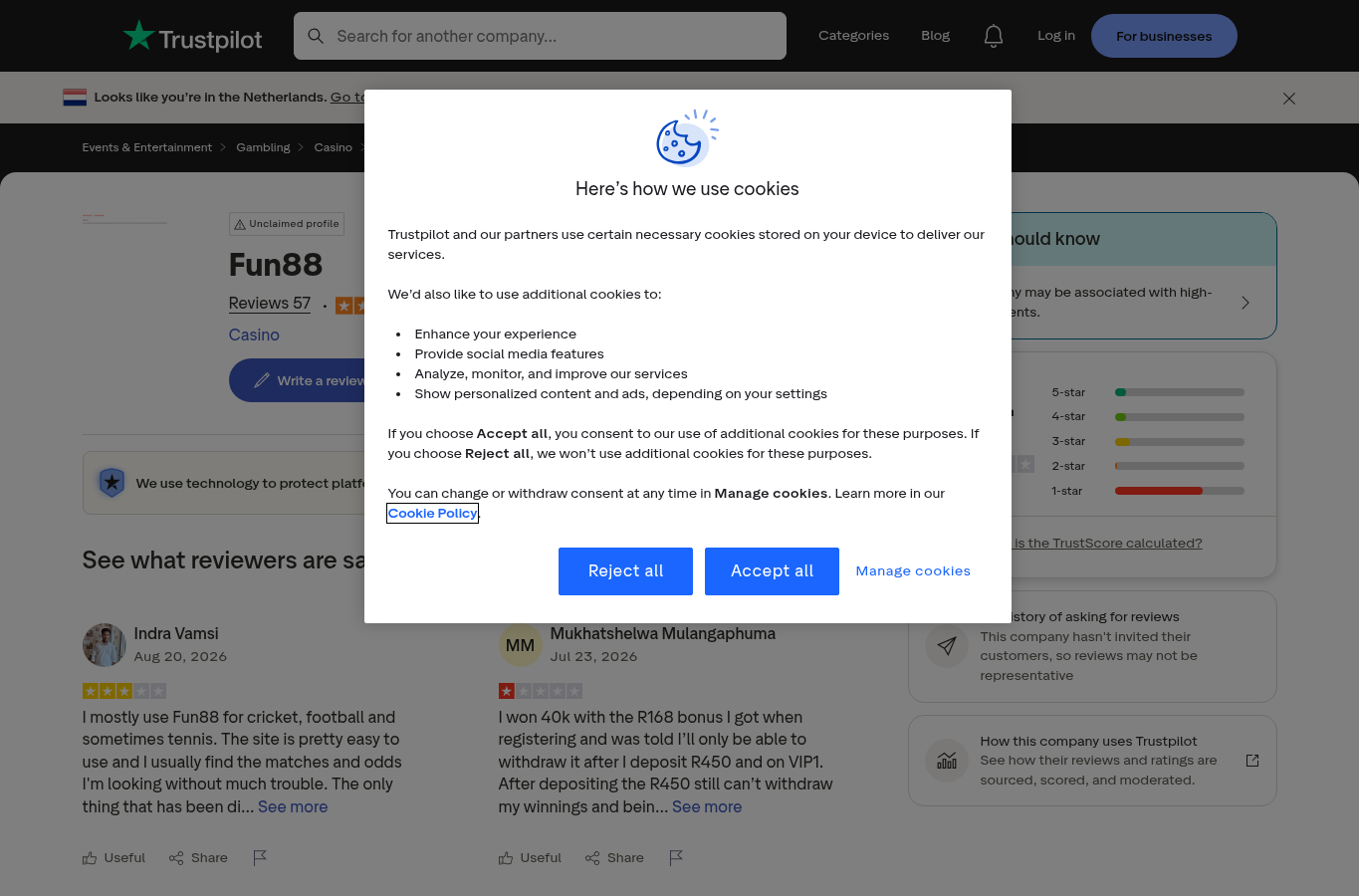
A third-party review record lists Singapore in a current restriction list. That is user-context evidence, not a Singapore regulator decision and not an account test. It is relevant as a warning to verify eligibility, but it should not be rewritten as proof that every user will be blocked or that a breach has occurred.
For Singapore legal context, read the Gambling Control Act directly. The supplied evidence supports the existence of the Act’s definitions, offences and minimum-age framework. It does not support a personalised legal conclusion about a particular transaction or individual.
Payments: what remains untested
No payment method, deposit route, fee schedule, processing time or withdrawal outcome was verified in the supplied packet. There is therefore no evidence-led basis to promise that a payment will work, that funds will be segregated, or that a withdrawal will be completed.
Before sending money, record the displayed currency, minimum and maximum amounts, fees, identity requirements, chargeback limitations and any restriction applying to Singapore residents. A payment logo is not the same as a confirmed merchant relationship. Use a payment instrument only after checking who the merchant is and whether the transaction can be disputed through the relevant provider.
| Payment question | Status | Safe interpretation |
|---|---|---|
| Which methods accept Singapore users? | Unknown | Do not infer availability from an icon. |
| Are deposits reversible? | Unknown | Check provider terms before paying. |
| How long do withdrawals take? | Not tested | No timeframe should be promised. |
| Are fees charged? | Unknown | Look for both service and intermediary fees. |
Withdrawals, KYC and account controls
No account was opened or tested. KYC timing, accepted documents, source-of-funds checks, wagering conditions, account closure, withdrawal review and dispute escalation are therefore unknown. These gaps matter because a service may advertise a payment option while applying separate verification or eligibility rules when a withdrawal is requested.
Do not upload identity documents merely to investigate a service. If a person proceeds independently, the exact hostname, privacy terms, legal entity, document purpose and retention information should be checked first. Never share one-time passwords, remote-access details or copies of identity documents with an unsolicited contact claiming to unlock a withdrawal.
Restriction and clone checks
Use the exact host rather than a search-result title or a social-media profile. Compare every character in the domain, confirm that the connection uses HTTPS, and avoid links supplied by unsolicited messages. A lookalike domain can copy colours, names and logos while sending credentials or payments elsewhere.
The supplied capture is contextual only and relates to a third-party user-signal record. It is not a regulator screenshot and does not prove a particular customer outcome.
Complaints, reports and urgent action
If money or personal information is at risk, preserve dates, transaction references, emails, domain spellings and screenshots. Do not pay an additional “release”, “tax” or “verification” fee merely because someone promises to recover funds. Contact the relevant payment provider promptly using its official channel and ask what dispute or fraud-reporting options exist.
For suspected unlawful remote gambling activity in Singapore, follow the reporting route identified by GRA and the Singapore Police Force. The Ministry of Home Affairs provides the broader Singapore gambling and casino regulation overview. A complaint is an allegation unless a dated competent-source record establishes an adverse finding; this dossier makes no such finding about Fun88.
Evidence chronology and method
The evidence was checked on 31 August 2026. Primary regulatory material was considered separately from the user-context restriction record and the operator-context favicon. The assessment asks whether the precise host and entity can be matched to current primary evidence, whether an official adverse record exists, and which service characteristics were actually tested.
| Evidence | Tier | Use in this assessment |
|---|---|---|
| GRA remote-gambling record | Primary | Regulatory position and reporting information. |
| Gambling Control Act | Primary | Legal framework and age/offence context. |
| MHA overview | Primary | General licensing and regulatory context. |
| Restriction list | User context | Warning requiring eligibility verification. |
| Favicon | Operator context | Domain-associated visual identification only. |
Decision and correction route
The amber signal means the evidence is open. It is not a declaration of fraud and it is not approval. The principal unresolved points are the current legal entity, corporate control, Singapore licence status, payment operation, withdrawal performance and complaint history. A future primary record precisely matching the host and entity could change the assessment; an official adverse record could also change it.
Readers who identify a material factual error should preserve the relevant dated primary record and use the site’s correction channel. This review should be updated only when the new evidence can be checked and attributed precisely. For a broader verification checklist, see casino checks and payment checks.
The unresolved identity questions should be treated separately from the question of whether a website can be reached. Confirm the precise domain, the named legal entity and the relevant jurisdiction before entering personal information. A displayed licence badge, payment icon, logo or search result is not a substitute for a current primary record. The supplied evidence does not confirm Welton Holdings as the controller and does not provide a tested route for deposits, withdrawals or customer support.
If the service or an intermediary requests unusual credentials, remote access, one-time passwords or an extra fee to release funds, stop and preserve the evidence. Contact the payment provider through a verified channel rather than relying on a message or link supplied by the service. These precautions do not establish wrongdoing; they reflect the fact that the supplied packet leaves key service controls untested.
A careful check should record the complete hostname, the stated legal entity, the jurisdiction claimed for the service and the date on which each item was reviewed. These details should be compared rather than treated as interchangeable labels. A brand can be imitated, a domain can change control, and a payment intermediary can differ from the website named in an advertisement.
Frequently asked questions
Is Fun88 a confirmed scam in Singapore?
No. The supplied evidence does not establish a scam finding. It also does not verify a current Singapore licence, corporate control, payments or withdrawals, so the service remains unverified.
Does Fun88 have a current Singapore GRA licence?
No current GRA match for Fun88, fun88.com or a confirmed operator entity was found in the supplied evidence. That is an open-evidence result, not an official adverse finding.
Can Singapore residents use the service?
Eligibility was not tested. A third-party restriction record explicitly includes Singapore, so users should not assume access or acceptance and should verify the exact current terms.
Were deposits or withdrawals tested?
No account, deposit, withdrawal or customer-support test was completed. Processing times, fees, KYC triggers and withdrawal outcomes are unknown.
How can I check for a Fun88 clone?
Compare the exact spelling of fun88.com, avoid unsolicited links, check the legal entity and review any licence claim against a current primary regulator record. A logo or favicon is not proof of ownership.
What should I do if I suspect a payment scam?
Preserve transaction records and messages, contact the payment provider through its official channel, and follow the current Singapore reporting route for suspected unlawful remote gambling activity. Do not pay an extra recovery or release fee.