Betway Singapore: licence, legality and risk checks

Start with the product boundary
A brand name can cover several different products, and those products should not be treated as one legal category. A casino service may offer games of chance, a sportsbook may accept bets on events, and a lottery product may operate under a different statutory or licensing arrangement. This dossier concerns the recorded exact domain betway.com and the question of whether a Singapore user should regard a remote gambling service associated with that domain as licensed, lawful and safe to use.
The evidence packet does not establish that every page, subdomain, mobile application or payment page using the brand is controlled by the same entity. It also does not establish that a particular casino, sportsbook or promotional offer is available to Singapore residents. An advertisement, search result, copied logo or redirected page is not enough to prove host identity. Start with the address shown in the browser, then compare the legal operator named in the terms, account notices, payment instructions and withdrawal correspondence.
| Question | What the packet supports | What remains open |
|---|---|---|
| Which product is being assessed? | The assessment is for a remote gambling service associated with the recorded domain. | The packet does not verify a particular casino game, sportsbook market or lottery product. |
| Who is the operator? | “Betway Limited” is presented in the supplied brief. | The packet does not independently confirm the current legal entity behind every Singapore-facing page. |
| Is there a Singapore licence? | No current GRA match was found for the recorded domain or presented operator. | Market migration and current territorial terms remain open. |
What the Singapore licence record means
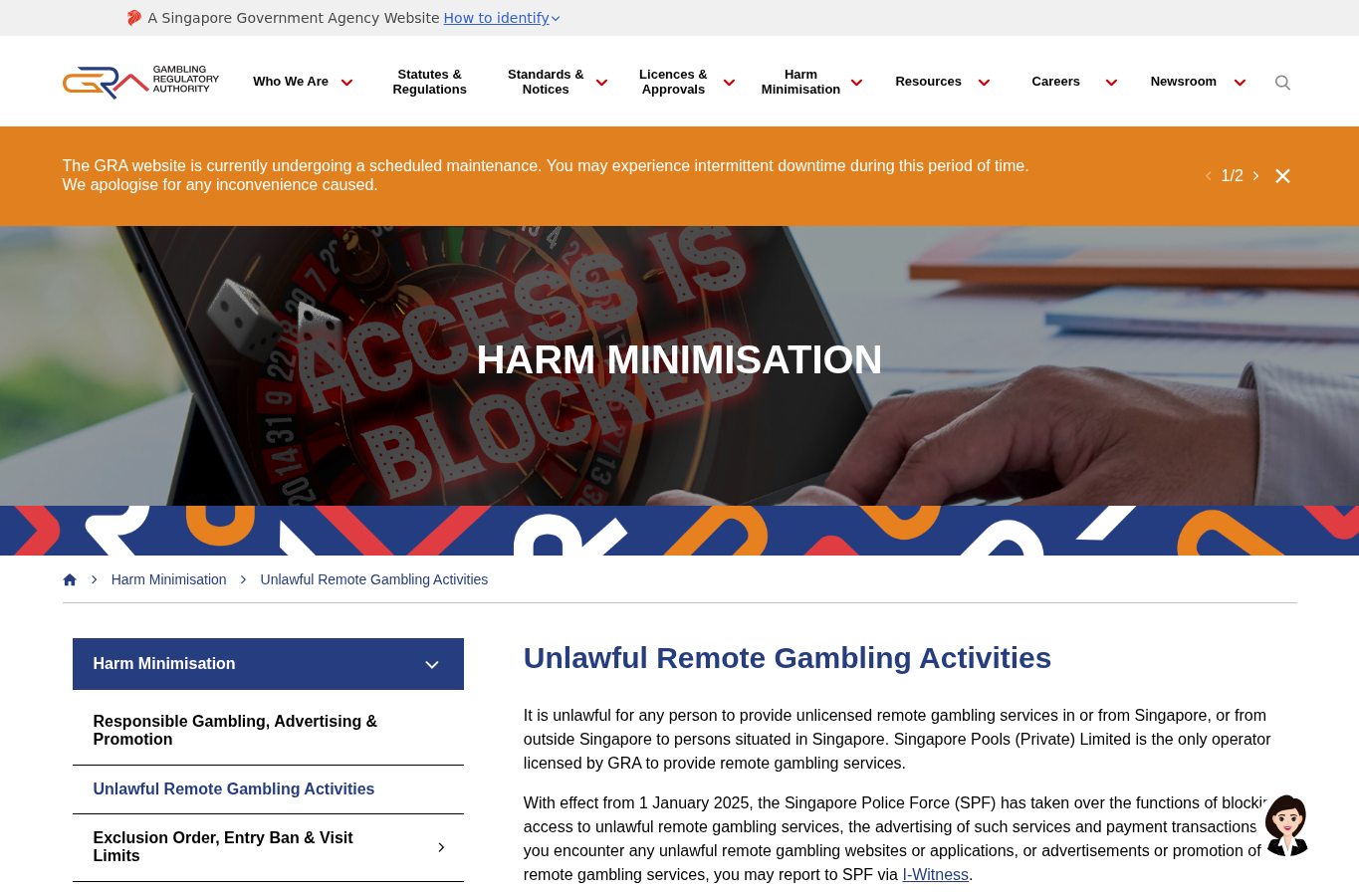
Singapore’s regulatory position is the most important starting point. The official Gambling Regulatory Authority material says that Singapore Pools is the only operator licensed by GRA to provide remote gambling services. It also states that reporting moved to the Singapore Police Force from 1 January 2025. That record is primary evidence about the licensed remote-gambling position; it is not a statement that every overseas website is fraudulent, nor does it confirm that an unlisted service is permitted for local customers.
The Ministry of Home Affairs explains that gambling is prohibited unless it is exempted or licensed, and that GRA regulates the sector. The relevant legal framework should therefore be read together with the exact activity, location, customer and licence status. A foreign registration, a licence from another country or a company’s own compliance statement would not by itself prove a Singapore remote-gambling authorisation.
On the supplied evidence, the correct signal is amber. Amber means the available records do not support a current precise-domain and precise-entity GRA match, but the packet also does not contain an official adverse finding naming the exact service as fraudulent. It is a prompt for verification and caution, not a declaration of guilt.
| Signal | Meaning in this assessment | Practical response |
|---|---|---|
| Amber | Evidence is open or incomplete for the precise domain, entity or territorial position. | Pause, verify the host and terms, and avoid assuming that access equals authorisation. |
| Not green | Current primary evidence does not support a precise Singapore licence match. | Do not describe the service as GRA-licensed. |
| Not red | The packet does not contain an official adverse record or corroborated finding sufficient for a red signal. | Do not call it a proven scam solely because evidence is incomplete. |
For the governing material, read the GRA remote-gambling guidance and compare it with the current statutory text.
Exact host, operator and licence matching
Host checking is a three-part exercise. First, record the complete hostname, including any country subdomain, shortened link, campaign path or login subdomain. Second, identify the legal entity named in the terms, privacy notice, payment receipt and customer-service reply. Third, compare both details with a current primary regulator record. A brand match alone is not a licence match.
The supplied logo asset only records that a favicon was fetched for betway.com. It is not licensing evidence, proof of ownership or proof that a page is genuine. A clone can reproduce colours, typography, icons and even an entire landing page. A genuine domain can also redirect a user to another host. Take a fresh note of the address before registration, at deposit, at withdrawal and when opening a complaint.
| Check | Evidence to retain | Failure or warning sign |
|---|---|---|
| Hostname | Full address and timestamp from the browser or app hand-off. | Unexpected spelling, extra hyphen, unfamiliar top-level domain or forced redirect. |
| Legal entity | Terms, privacy notice, invoice, payment descriptor and support response. | Different names across documents or no identifiable entity. |
| Regulator match | Current primary register entry for the exact entity and domain, where available. | Only a foreign licence, logo, badge or unverified claim is supplied. |
| Territorial terms | Current wording for Singapore eligibility and restricted locations. | Singapore is restricted, terms are unavailable, or wording conflicts between pages. |
What the current restriction signal says
The supplied user-context record says that a current restriction list explicitly includes Singapore. This is useful as a warning about territorial availability, but it is not primary Singapore licensing evidence. It should not be expanded into a claim about all historical accounts, all products or every page carrying the brand. The prudent reading is narrow: a source reviewed for this dossier reports Singapore as restricted, so a Singapore user should not infer eligibility from being able to load a page or create an account.
Restriction wording can change after a market migration, corporate change, product change or update to terms. Verify the date and the exact wording shown at the point of attempted registration. If the page asks for a country that is not actually accepted, or permits a deposit but later invokes a territorial restriction, preserve the terms, transaction record and support exchange. Do not attempt to bypass a country block with a false address or another person’s account.
Deposits, withdrawals and transaction risk
No verified payment method, successful withdrawal test or transaction outcome was supplied. Accordingly, it would be unsafe to promise that a card, bank transfer, e-wallet or cryptocurrency payment will be accepted, protected or returned. Payment icons on a page show only what the page presents; they do not establish that the account holder, merchant, processor and beneficiary are the same legal party.
Before sending money, inspect the final payment screen and record the merchant descriptor, currency, fees, minimum amount and stated processing conditions. A mismatch between the service name and the recipient should be treated as an unresolved risk, not automatically as proof of fraud. Never pay a separate “release”, “tax”, “verification” or “recovery” charge merely because a message says a withdrawal is locked. Ask for the contractual basis in writing and keep the original correspondence.
| Transaction stage | Record before acting | Why it matters |
|---|---|---|
| Deposit | Recipient, descriptor, currency, fees and confirmation number. | Shows where funds were sent and whether the recipient matches the stated operator. |
| Account funding | Applicable bonus conditions, wagering language and restricted-country clause. | Promotional terms can affect the amount that may be withdrawn. |
| Withdrawal | Method, limits, identity requirements, queue status and promised timescale. | Creates a dated record if processing is delayed or conditions change. |
| Dispute | Ledger, bank statement, screenshots and all support tickets. | Allows a payment provider, regulator or police report to be specific. |
For a structured transaction checklist, use the internal payment checks guide. It cannot turn an unverified service into a licensed one, but it can reduce avoidable payment mistakes.
Identity checks and account access
No KYC outcome was supplied. The service’s actual identity-document list, verification timing, source-of-funds rules, account closure process and data-retention terms are therefore unknown in this assessment. A request for identity documents is not automatically illegitimate: regulated or risk-sensitive services may seek information. The relevant questions are who receives it, why it is needed, how it is protected, whether the request appears on the genuine host and what happens if the user declines.
Do not send an identity document through an unsolicited message, a newly supplied address or a social-media account. Re-enter the known host manually, check the legal notice and ask support to identify the contractual entity. Redact information that is not required where the receiving process allows it, and keep a record of exactly what was submitted. Do not provide another person’s document or alter an address to overcome a territorial restriction.
Account access can also become a practical risk. Save confirmation emails, terms versions and deposit receipts while they are available. If an account is suspended, request the reason, the relevant clause, the balance calculation and the process for withdrawing any undisputed balance. These steps document a dispute; they do not guarantee a result.
Scam, clone and impersonation checks
“Legit” is not a single test. A page may be genuine but unavailable or unauthorised for Singapore, while a clone may use a familiar name and request money through an unrelated channel. Check the exact host each time rather than relying on a bookmark supplied by an advertisement. Inspect the spelling of the domain, certificate warning, redirect chain and payment recipient. Treat urgent messages, guaranteed winnings, pressure to deposit and requests for remote device access as serious warning signs.
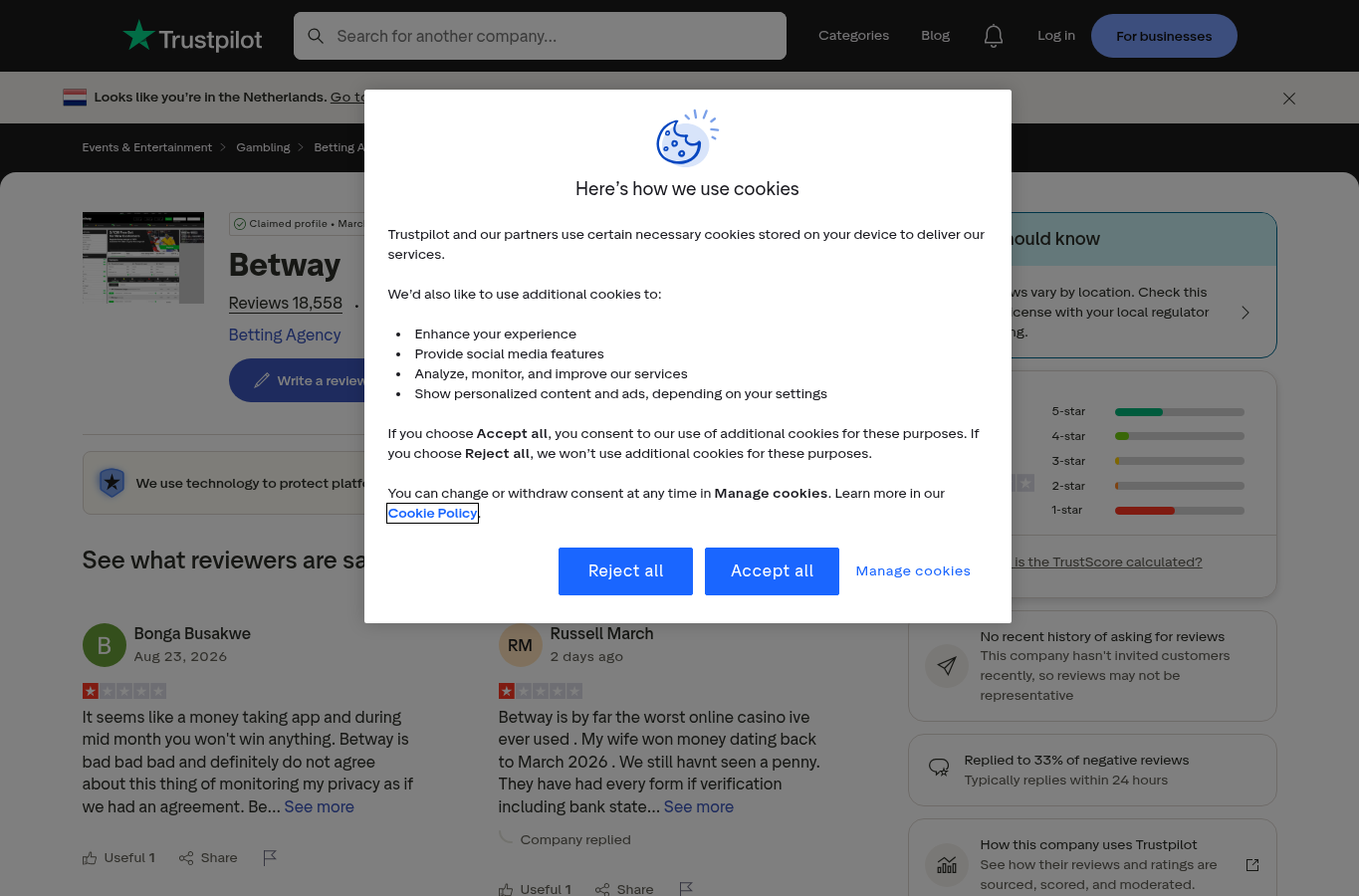
The supplied user-signal capture is contextual only and does not prove a regulatory breach, payment failure or personal experience. Similarly, the supplied favicon confirms only that an image was fetched for the recorded domain. Neither item establishes operator control or licensing. A screenshot should be preserved with its source, date and surrounding address bar where possible, but it should not replace a current regulator record.
Complaints and suspected unlawful activity
Separate a commercial complaint from a suspected unlawful-remote-gambling report. For a commercial complaint, first write to the support address displayed on the verified host and set out the account identifier, transaction, date, amount and requested remedy. Avoid sending unnecessary personal information. Give the operator a reasonable opportunity to respond, while preserving the original terms and payment records.
If the concern is suspected unlawful remote gambling, impersonation, unauthorised payment activity or an apparent clone, use the relevant Singapore reporting route and provide concise evidence. The supplied primary record says reporting moved to the Singapore Police Force from 1 January 2025. Do not describe an allegation as an established offence. A regulator or law-enforcement agency decides whether the facts meet a legal threshold.
| Concern | Useful evidence | Careful description |
|---|---|---|
| Withdrawal dispute | Account messages, transaction ID, terms and ledger. | “The withdrawal was delayed or disputed on the recorded dates.” |
| Impersonation | Exact host, message headers, payment recipient and screenshots. | “The page or message appeared to impersonate the service.” |
| Territorial restriction | Country clause, registration screen and support reply. | “The available record indicates Singapore may be restricted.” |
| Suspected unlawful activity | Timeline, URLs, payment trail and identity of the reporting party. | “This is a report for competent authorities to assess.” |
For general routing, see complaints and scam warnings. The route is informational and does not decide the merits of a complaint.
Chronology, evidence limits and unknowns
The records supplied for this review were checked on 31 August 2026. The chronology begins with the primary regulatory position that Singapore Pools is the only GRA-licensed remote-gambling operator, alongside the official explanation that gambling is prohibited unless licensed or exempted. A current restriction signal then reports that Singapore is included in a restriction list. The exact-domain favicon and user-context capture were retained as limited supporting records, not as licensing proof.
Important unknowns remain: no registration attempt was performed; no payment or withdrawal test was conducted; no current GRA match was found for the presented operator; the current legal entity behind every page was not independently confirmed; and market migration and current territorial terms remain open. The absence of a test is not evidence that a transaction would fail or succeed. It means the result cannot responsibly claim either outcome.
| Evidence tier | Record used for | Not enough to prove |
|---|---|---|
| Primary | Singapore regulatory position, legal framework and sector explanation. | That the assessed service holds a licence. |
| Operator or brand asset | Identification of the recorded favicon asset. | Ownership, safety, legality or payment performance. |
| User context | A reported territorial restriction and contextual capture. | A regulator finding, scam determination or universal customer outcome. |
Method and correction path
The method is deliberately narrow: identify the precise host, distinguish presented operator information from independently verified records, prioritise current primary sources, label user reports as context, and state unknowns rather than fill them with assumptions. The amber signal follows that method. It reflects open evidence and the absence of a current precise-domain GRA match in the supplied packet.
Corrections should identify the exact sentence, provide a dated competent-source record or a clearly attributable document, and explain which host and legal entity it concerns. A new logo, anonymous post or undated screenshot would not by itself resolve the licence question. If the operator, host or territorial terms change, the assessment should be revisited rather than silently generalised from an older record.
Read the broader Singapore gambling-law guide for the statutory context. If, after checking the evidence and the terms, you choose to proceed to a supplied destination, use the marked route only after confirming that the service is available and lawful for you: Continue with the recorded route.
Bottom line for Singapore users
Is Betway a scam or legit? The supplied evidence does not justify either a definitive scam label or a claim that the service is licensed for Singapore. The primary regulatory record identifies Singapore Pools as the only GRA-licensed remote-gambling operator. A contextual restriction record includes Singapore, while the precise current entity, market position and transaction experience remain unresolved. Therefore, treat the service as an amber, open-evidence case: do not rely on branding, do not bypass territorial restrictions, do not send money or identity documents until the host, operator, terms, recipient and legal position have been checked, and preserve records if a dispute or suspected impersonation arises.
Frequently asked questions
Is Betway licensed by GRA in Singapore?
No current GRA match was found in the supplied evidence packet for the recorded domain and presented operator. The primary record supplied for this review says that Singapore Pools is the only operator licensed by GRA to provide remote gambling services. It is therefore not supported to describe Betway as GRA-licensed on this evidence.
Does being able to open a website prove it is legal?
No. Website access proves neither a Singapore licence nor eligibility to use a particular gambling product. A user should compare the exact hostname and legal operator with current primary records and read the territorial terms. A page may load even when Singapore is restricted or when the legal status is unresolved.
Does the restriction signal prove that the service is a scam?
No. The supplied restriction record is user-context evidence, not an official finding that the service is fraudulent. It is a reason to treat Singapore eligibility as unresolved and to avoid bypassing a country restriction. A scam conclusion requires stronger, appropriately corroborated evidence.
Can I rely on the logo or favicon to verify the operator?
No. The supplied favicon was fetched for the recorded exact domain, but it is not licensing evidence and does not prove ownership, safety or payment performance. Cloned pages can reproduce visual assets. Verify the full hostname, legal entity, payment recipient and regulator position separately.
What should I do if a withdrawal is delayed?
Keep the transaction ID, ledger, terms version, payment record and every support exchange. Ask for the contractual reason, balance calculation and applicable withdrawal process in writing. Do not pay an unexplained release or recovery charge. If the concern involves suspected unlawful activity or impersonation, prepare a dated evidence timeline for the appropriate Singapore reporting route.
What evidence is still missing?
No registration attempt, payment test or withdrawal test was supplied. The current legal entity behind every page was not independently confirmed, and market migration and current territorial terms remain open. These gaps prevent a reliable claim about payment success, withdrawal performance or Singapore authorisation.